Are these really the best ski resorts in the Midwest?


The Midwest’s four best ski resorts are in Great Lakes states, according to Outside Magazine. Here are the publication’s picks:


Best Powder: Mount Bohemia, Michigan

Best Terrain Park: Nub’s Nob, Michigan

Best Nightlife: Afton Alps, Minnesota

Best Escape: Devil’s Head Resort, Wisconsin

You can check out Outside’s reasoning. But we’re willing to bet there may be some disagreement out there. How about it?  


When in Drought: Satellites show low Great Lakes groundwater

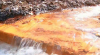
The drought plaguing the country continues to sap the groundwater and soil water of the Great Lakes region, according to new NASA satellite data. The two maps, constructed using data from NASA’s Gravity Recovery and Climate Experiment satellites, show low near-surface and subterranean water levels across the region between January 8 and 14, 2013. These satellites have been used to examine surface soil and ground water levels since they were launched in 2002. While not as low as some areas of the southeast or west, much of the region remains below the 1948-2009 average. Average levels are denoted by white space on the maps, while above-average is blue and below-average appears red.

Wisconsin 4th graders exposed to lead got lower grades


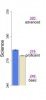
The more Milwaukee public school fourth graders were exposed to lead, the lower their grades, according to a University of Wisconsin study. Comparing 3,757 students, those who tested higher for lead exposure scored worse on the state’s Knowledge and Concepts Exam, which measures math, reading and other skills, according to the study. Exposure among African American and Hispanic children were roughly double those of white children. Differences in scores ranged from 5.2 in social studies to 9.8 in reading, said Mike Amato, a doctoral candidate in psychology and environmental studies. The differences made up a large chunk of the distinction between “basic” and “proficient” competence in a given subject.

Judas test: Will carp betray their own?


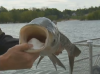
University of Minnesota researchers are recruiting common carp to test a way to eliminate Asian carp, according to WCCO-TV. Fisheries experts fear that the invasive Asian carp may spread into the Great Lakes and elsewhere and outcompete native fish with its voracious appetite. The researchers are fitting common carp, or “Judas fish,” with transmitters to lead them to other, larger schools of common carp, the station reports. “(Carp) seem to be actually exceptionally social, they really hang out together,” researcher Peter Sorensen told the station. “We have to confirm that, but it sure looks that way.”

If the experiment shows how a common carp can “betray” other common carp locations, the same technique could be used in Asian carp populations to help exterminate them in the future, said Bill Hudson, the story’s reporter.

Satellites reveal scant Great Lakes ice cover


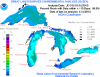
A composite map of the Great Lakes produced by NOAA’s CoastWatch organization shows near-historic low ice coverage across the region. The map, known as the Great Lakes Surface Environmental Analysis, is a composite of data taken from NOAA satellites orbiting the earth’s poles and radar scans of the lakes by the National Ice Center. The resulting image shows surface water temperature and ice coverage, important data for region scientists, fishermen and boaters. The map’s data is updated daily. “Previously, the lowest ice coverage year was 2002,” CoastWatch manager George Leshkevich said.

Report invasive species on your smartphone

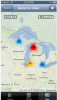
Smartphone owners can report invasive species sightings using an application by the Midwest Invasive Species Information Network. Users can then see real-time maps of a given species’ distribution based on the data reported by other users. And they can read more about the species. The data reported to the app will be “used by land managers to help make informed decisions regarding the management and impact of invasive species,” according to the application’s official description. One can also view pictures taken by other users and submit pictures of their own sightings to the network.