Repeated plunges into icy Lake Michigan will raise money for Special Olympics

It may not be the best time for a swim in Lake Michigan, but that isn’t stopping 37 Illinois residents on Friday. Those taking part in the 8th annual 2013 SUPER Plunge will be braving the icy waters to raise money for Special Olympics Illinois. The SUPER acronym says it all: Some Unbelievable Plungers Enter Repeatedly. It’s so named because participants are expected to dive not once, not twice, but 24 times over the course of 24 hours. The Lake Michigan water may be frigid, but the event is undoubtedly effective.
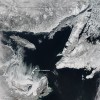
Sea ice in the Gulf of St. Lawrence

The Gulf of St. Lawrence, the outlet of the Great Lakes into the Atlantic Ocean, is building toward its annual peak accumulation of sea ice, according to a recent photograph captured from NASA’s Aqua satellite. According to NASA, each year, the amount of frozen seawater, known as sea ice, in the Arctic Ocean builds from September through February or March as surface air temperatures drop below freezing. As it reaches the peak of its expansion, it begins to form in the Gulf of St. Lawrence.

Goosinator terminates E. coli


The developers of a remote-controlled, geese-scaring device called the Goosinator say it controls health-threatening E. coli bacteria deposited by geese droppings. Geese and seagull droppings contribute to beach and park closings, said Dave Colton, the Goosinator’s director of sales. Company officials say their product helps keep areas fowl free. Its bright orange color and glaring teeth scare the geese, according to the product website. And a separate, stationary Goosinator acts like a scarecrow to make sure they don’t return, Colton said.

Watch time lapse of Lake Erie freezing


Check out this video that shows Lake Erie freeze over a span of three days. It was created by Great Lakes Vista, a website that captures live feeds and still photos of Lake Erie. The site’s images are captured using an old camcorder in a weatherproof box. Software takes a picture every two minutes in addition to a video stream that runs constantly, according to Mark Lasmanis, the owner and operator of Great Lakes Vista. Those who donate to the site get access to the active video stream as a perk, but the site also features archives of the last hour of still images, which comes in handy if you want to check developing weather conditions.

Mr. Great Lakes: Dragons, energy and bacteria

 
Mr. Great Lakes (Jeff Kart) reports from Bay City, Michigan’s Delta College Q-90.1 FM.  


This week Kart discussed an energy forum at Delta College on March 4, dragonflies in Saginaw, and a project to reduce high bacteria levels on the Kawkawlin River. Text at Mr Great Lakes

Current State: Great Lakes dredging

Lake Michigan and Lake Huron hit record low water levels this month. The receding water causes environmental and economic problems in the Great Lakes Basin. Michigan Gov. Rick Snyder has proposed a $21 million plan to dredge harbors. Patrick Doran, director of conservation for the Michigan Chapter of the Nature Conservancy and Jon Allan, director of the Office of the Great Lakes, discuss dredging and the future of the Great Lakes’ water levels.  

Mr. Great Lakes reports

 
Mr. Great Lakes (Jeff Kart) reports from Bay City, Michigan’s Delta College Q-90.1 FM.  

Kart discusses energy savings from solar shingles and concerns over growing waste in Michigan landfills. An update of the Great Lakes Bowl competition that he mentions is here. Text at Mr Great Lakes

Students compete in Great Lakes Bowl


Do you know the name for a zone in a body of water where temperature rapidly changes with depth? Students competing in the 2013 National Ocean Sciences Bowl are expected to know the answer. In fact, the question is categorized as “easy.” This year’s Great Lakes regional competition was held Saturday, Feb. 9 at the University of Michigan’s School of Natural Resources and Environment.