Battling the Bloom: Lake Erie

 
Click here to watch Battling the Bloom: Lake Erie
In 1970, sections of Lake Erie were declared dead due to an excess of toxic algal blooms created by industrial pollution. But a little over a decade later, the lake went through a transformation that saw a return of wildlife and recreation to the area. Over the past five years, the blooms have returned. These blooms are largely caused by fertilizer and farmland waste nearby running off into Lake Erie. The video linked above discusses the past and current threats posed to Lake Erie by these blooms, and what scientists and conservationists are doing to stop them.

Play brings drama of historical Great Storm to the stage

The Great Lakes Storm of 1913 is widely considered to be the defining tragedy of the region. This year marks the 100th anniversary of the storm that claimed the lives of more than 250 people and destroyed 19 ships. Now that tragedy is coming to the stage. “The Great Storm,” a play directed by Warren L. Robinson, follows the stories of two families whose worlds are shaken by the disaster. The play is part of the three-month long “A Remembrance of the Great Lakes Storm of 1913“ event, established by the Port of Goderich in Ontario and a group of volunteers in the Lake Huron community.

Green Gridirons: Penn State University

A football stadium may have green grass but does it have green habits? Each week, Great Lakes Echo highlights a Big Ten football stadium’s attempts to do the most to impact the environment the least. All schools have information on the stadium’s diversion rate – the amount of waste recycled instead of put in a landfill. Stadium: Beaver Stadium

School: Penn State University

Built: 1960

Capacity: 106,572

2009 diversion rate: 48.6 percent

Scouting report: Penn State has been recycling at Beaver Stadium for almost 16 years, but a recent initiative to promote recycling helped the university more than triple its recycling average. Since 2008, Penn State has diverted more than 100 tons of trash from landfills from Beaver Stadium, university officials said.

Little Things, Big Problems: Aquatic invaders

Last year, the Great Lakes Restoration Initiative began producing a series of educational videos about invasive species in the Great Lakes for the National Park Service. New videos are being uploaded this spring, and you can watch the entire “Little Things, Big Problems” series here on Echo. This video discusses invasive species in Lake Michigan and how they are affecting the food web and the health of birds.

What’s on your bookshelf?

By Eric Freedman

The more things don’t change…

I’ve been perusing the shelves of the Knight Center’s conference room library, getting rid of–recycling–outdated books to make room for new ones. These, published from the early 1980s through the mid-1990s, are just a sampling of our castaways:

“Footprints on the Planet: A Search for an Environmental Ethic” by Robert Cahn
“Public Policy for Chemicals: National & International Issues” by Sam Gusman, Konrad von Moltke, Francis Irwin & Cynthia Whitehead
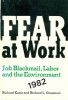
“Fear at Work: Job Blackmail, Labor & the Environment” by Richard Kazis and Richard Grossman
“Radiation & Human Health” by John Gofman
“Renewable Energy: The Power to Choose” by Daniel Deudney & Christopher Flavin
“Environmental Regulation and Economic Efficiency” by the Congressional Budget Office
“Crossroads: Environmental Priorities for the Future” by Peter Borelli
“International Environmental Policy: Emergence & Dimensions” by Lynton Caldwell
“Global Warning: The Economic Stakes” by William Cline
“How Many Americans? Population, Immigration & the Environment by Leon Bouvier & Lindsey Grant

Although their content may be stale–often by decades–what struck me was how the same issues remain prominently in today’s headlines: Alternative energy. Population. Climate change.

Green Gridirons: University of Maryland

A football stadium may have green grass but does it have green habits? Each week, Great Lakes Echo highlights a Big Ten football stadium’s attempts to do the most to impact the environment the least. All schools have information on the stadium’s diversion rate – the amount of waste recycled instead of put in a landfill. Stadium: Byrd Stadium

School: University of Maryland*

Built: 1950

Capacity: 54,000

2008 diversion rate: 41 percent

Scouting report: Maryland’s “Feed the Turtle” program began in 2008 to expand food composting and recycling at home football games. The program’s name refers to the mascot of the school, a terrapin.

Little Things, Big Problems: Spiny water flea

Last year, the Great Lakes Restoration Initiative began producing a series of educational videos about invasive species in the Great Lakes for the National Park Service. New videos are being uploaded this spring, and you can watch the entire “Little Things, Big Problems” series here on Echo. This video discusses the impact spiny water fleas have on the Great Lakes food web.

Michigan food hubs seek to make local food more accessible

The locavore movement has taken off in the last five years at least. This notion that consuming food that is raised and grown close to where we live was even given a memorable send-up in the hit IFC comedy “Portlandia.” But parody is not the only thing the locavore movement has spawned. Over the last five years, food hubs have become an increasingly popular way to scale the local food movement affordably and efficiently.