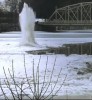
This image comes from Lauren Jorgensen a petty officer in the U.S. Coast Guard. Heading towards Cleveland, The Cutter Neah Bay breaks through ice on Lake Erie. To submit an image for consideration for Great Lakes Echo’s Photo Friday feature, send the image, a caption and your name to greatlakesecho@gmail.com. Put Photo Friday in the subject line.
Raise your secchi disks and get out the thermistor–it’s lake monitoring season and you can be the scientist. The Michigan Clean Water Corps is recruiting volunteers to monitor the quality of the state’s inland lakes. Secchi disks gauge water clarity–a major lake health indicator. Thermistors measure water temperature. Volunteers also sample native and exotic aquatic plants at different depths, measure dissolved oxygen and collect algae and water samples for chlorophyll and phosphorus tests.
About 25 percent to 29 percent of adults in the Great Lakes region are obese, according to the Centers for Disease Control and Prevention statistics. Playing with their potatoes might just be what the doctor ordered.
To combat ice sheets on the Ottawa River in Canada, you might say explosives are this team’s dynamite. Ice builds up on a 9-kilometer stretch of the Ottawa River each winter, creating an icy problem should water swell behind an ice jam and flood any of the 900 buildings nearby. A quick remedy–dynamite. “Ice blasting” started in the 1880s according to a BBC article. By the 1960s and 1970s, the explosive practice became an annual flood prevention measure.
Michigan residents renewing their car registration can now simply check “yes” for an annual unlimited pass for state parks and boat launches. Michigan is only the second state to develop this type of park payment plan. Montana is the other. Since the program began last October, almost 20 percent of renewing drivers chose to participate. The new program replaces the previous $24 annual passes sold at park offices.
You can get cash if you get wet and wild with urban water data. Visualizing.org, a data design website, and a Traverse City, Mich.-based news organization specializing in global water issues called Circle of Blue teamed up for the World Water Day data visualization challenge. They’re asking for people to visualize urban water issues caused by the mass migration of rural residents to urban areas and a lack of city planning. The organizations want data to tell that story and hope to glean the water information and new ways to visualize it from data designers and experts. The contest launched Feb. 21 and runs until March 15.
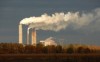
Four Great Lakes states rank in the top ten–for 2010 power plant carbon dioxide emissions. A recent report by the Environmental Integrity Project shows carbon dioxide emissions from power plants rose 5.56 percent nationwide. More than 2.4 billion tons of carbon dioxide, a common greenhouse gas, were released nationally. Texas topped the list with about 257 million tons. Ohio led the Great Lakes states and placed third nationally.
The Great Lakes system of locks and canals opened up the region to more than just economic opportunities; it also paved the way for hundreds of destructive invasive species. Their untold negative impacts on the region’s ecology and economy have lead some to consider them “bad company.”
The Knight Center for Environmental Journalism at Michigan State University examines the history of Great Lakes invasive species in its fourth documentary: “Bad Company.” Instructor Lou D’Aria and journalism student Matt Mikus co-produced the one-hour documentary with help from associate producer Rachael Gleason and a handful of additional Michigan State students. A screening of the documentary will take place Monday, Feb. 28 at 7 p.m. at Michigan State University in the Snyder Hall Residential College of Arts and Humanities theater. Here’s a taste of the one-hour documentary:
Check out these two stories that appeared on Echo recently. One is this piece by Gary Wilson about privatizing public water service in Chicago. The other is this piece by Kari Lydersen about the Kennecott mine proposal in Michigan’s Upper Peninsula. They don’t appear to have much in common. One is commentary on a big city urban issue.