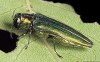
See emerald ash borers in action; states still battling the bug

Now is the best time to see the destructive, tree-eating emerald ash borer up close and personal. The inch-long green metallic beetles are most numerous from late June to mid July, according to the Emerald Ash Borer Information Network. But don’t be fooled by lookalikes. Here’s a guide for proper identification of the nasty nuisance. Officials have banned imported firewood, removed ash trees and even released tiny wasps to prevent them from overwhelming the region with little luck; the beetle has spread to all Great Lakes states over the past decade.

Michigan museum to screen Knight Center invasive species documentary Wednesday

At 6 p.m. Wednesday, a St. Joseph, Mich. museum will screen Bad Company, a one-hour documentary examining how humans have altered the ecology and economy of the Great Lakes region. ‘Bad Company’ is Michigan State University’s Knight Center for Environmental Journalism’s fourth documentary. Michigan State University instructor and filmmaker Lou D’Aria and co-produer Matt Mikus will be present at screening at the Heritage Museum and Cultural Center, 601 Main Street.

Driven to solve the case of the tweet’s missing underscore

If you’re following Echo on Twitter, make sure that you’re following the GreatLakesEcho username and not GreatLakes_Echo. You caught the difference, right? The second has that little underscore between Lakes and Echo. Both usernames exist, but Echo will concentrate fresh tweets on GreatLakesEcho — the one without the underscore. The one with the annoying little line will soon go away.

Great Lakes on a beer coaster

Imagine ordering a beer at a bar, looking at the coaster your glass was just put on and seeing your artwork – photographic or otherwise. That’s what Great Lakes Forever’s seventh annual photo contest proposes to do with winning photos and artwork. Submit an image or artwork related to the Great Lakes region, showing its unique landscape and the communities living on its shores and you could also win other prizes. The original art category is a new approach this year. While photographers, professional and amateur, have entered their images in the past, this year’s contest is also soliciting drawings, paintings, graphic illustrations or other Great Lakes inspired art.

Upending the basin: Service explores rivers of news

By David Poulson

Echo readers may be interested in the just-launched Michigan River News. We are. Like Echo, Michigan River News defines its news community by natural features rather than political boundaries. It’s a great experiment in environmental journalism. The two founders are former Echo writers and graduates of the masters program here at Michigan State University’s Knight Center for Environmental Journalism.

MASHUP: Climate change ‘Hot Map’ features Great Lakes cities

Life-threatening heat waves, record snowfalls and lake level drops are just a few climate change catastrophes in store for the Great Lakes region, according to an interactive map recently launched by the Union of Concerned Scientists. Climate Hot Map features current climate change impacts to locations across the globe, including five Great Lakes hot spots. Click on “see detail page” at the bottom of each icon box for more information on impacts to that location. Scientists expect more intense lake-effect snowfall in the Midwest and more precipitation during the winter and spring due to rising temperatures, according to the page for Cleveland, Ohio. And warming summer temperatures in Wyoming County, N.Y. are stressing cows and lowering milk production and birthing rates, according to the map.

Save the planet, eat an invasive

The Great Lakes region could save a lot of money by following the “if you can’t beat ‘em, eat ‘em” motto of a website called Invasivore.org. A handful of biologists, ecologists and doctoral students update the site with news on pesky invaders and recipes, like this Ma-po Garlic Mustard and Tofu dish. Garlic Mustard is an aggravating weed that covers forest floors and dominates root systems throughout the Great Lakes. But when paired with broccoli, tofu and a spicy sauce, it apparently is something to be desired. The eating of invasive species is “reasonable revenge” for the harm these animals, fish and plants inflict on natural environments, according to Invasivore.org.