Echo
Great Lakes Echo (https://greatlakesecho.org/tag/catch-of-the-day/page/102/)

In the Twitter-verse, a lot of thought goes into choosing a name. A catchy handle attracts followers – something the man behind @HarnessFarts knows all too well. @HarnessFarts tweets often about alternative fuels and helps followers cut their water and energy use. We caught up with Greg, the man behind the tweets, in an email and got answers to our burning fart and Twitter questions. Why farts?

If you’re looking for health food in Detroit, your best bet might be the airport. Yes, that’s right. The Detroit Metropolitan Wayne County Airport has been number one for healthiest airport food for three years running. The Physicians Committee for Responsible Medicine conducts the annual restaurant review of the country’s busiest airports. The review determines whether restaurants have at least one low-fat, cholesterol-free meal available.
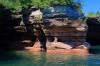
I’ve lived in Michigan my entire life, and, as my city slicker little sister likes to tell me, I’m “such a Midwesterner.”
And she’s probably right. But if having a beard, wearing flannel and vacationing in the Great Lakes is wrong, I don’t want to be right. I’ve seen a black bear meandering carelessly through the Porcupine Mountains. I’ve paid close to a month’s rent on drinks at the top floor of the John Hancock Building in downtown Chicago. I’ve battled nausea, more than once, while trolling Lake Michigan for salmon.

Have you ever wondered why geese flock to a nice clean lawn? Sebastian the goose explains the attraction. Sebastian loves short, tasty grass and feels safe when he can see predators from far away. That’s why he loves mowed lawns and shorelines. And this fowl admits to fouling a yard 28 times a day, generating almost 1.5 pounds of waste.

When people talk about restoring the Great Lakes, they’re not looking back as far as John Janssen, professor at the University of Wisconsin-Milwaukee School of Freshwater Scientists. “I want to bring the coral reefs back,” Janssen said. Ancient coral reefs are peppered throughout some of the Great Lakes where glaciers carved out tough rock formations 400 million years ago. Remnants of reefs can be seen on the eastern side of Lake Michigan, the Bruce Peninsula of Lake Huron, the southwestern side of Lake Erie and near Niagara Falls. Lake Superior is the only lake that never had reefs.
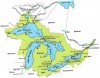
It appears the Great Lakes are getting social. At least it does if you visit the new aggregation site, Social Great Lakes. The site has Twitter feeds lined up like stock tickers constantly in motion. They pull in tweets on news, travel, weather and sports in the Great Lakes, and then the same categories for each lake. The Twitter feeds are updated by searching entire tweets, not just hashtags.

The 2012 Canon Envirothon competition is underway, and Great Lakes states are looking for participants. Envirothon teams compete in outdoor challenges that test their understanding of soils, land use, aquatic ecology, forestry, wildlife and current environmental issues. Students may also do volunteer projects and give presentations about their experiences. States have their own Envirothon programs. Check them out for more details on signing up.

Nestled in the northwest corner of Michigan’s Lower Peninsula, the Grand Traverse Bay has had declining native fish populations for decades. And all-too-common perpetrators are largely to blame — aquatic invaders. But a new federal and state partnership seeks to bolster the popular bay’s native fish populations. Officials will use traps and seismic guns to clear rusty crayfish and round gobies off of spawning reefs, where they hang out and eat fish eggs. “We are trying to give the native species a helping hand,” Lindsay Chadderton said in a prepared statement.

Tim Campbell at the Wisconsin Sea Grant has found a way to bring the Great Lakes to your holiday celebrations. Sit around the fireplace and sing The Twelve Days of Aquatic Invasive Species Christmas with all your lake-lovin’ friends and family.
On the twelfth day of Christmas, a freighter sent to me
Twelve quaggas clogging
‘Leven gobies gobbling
Ten alewives croaking
Nine eggs in resting
Eight shrimp a’swarming
Seven carp and counting
Six lamprey leaping
Five boat-wash stations! Four perch on ice
Three clean boat steps
Two red swamp crayfish
And a carp barrier in the city! Check out the full version for details on each aquatic invasive.