
By Addie Tussing
Every year, thousands of hopeful hunters apply for one of only 260 licenses to hunt elk in Michigan.
The state Department of Natural Resources (DNR) received a record-breaking 47,493 applicants in 2025.
“It’s a chance for folks in Michigan who are used to some similar hunting experiences, but with the added uniqueness and challenges of pursuing a different animal,” said Brent Rudolph, the deer, moose and elk specialist with the DNR.
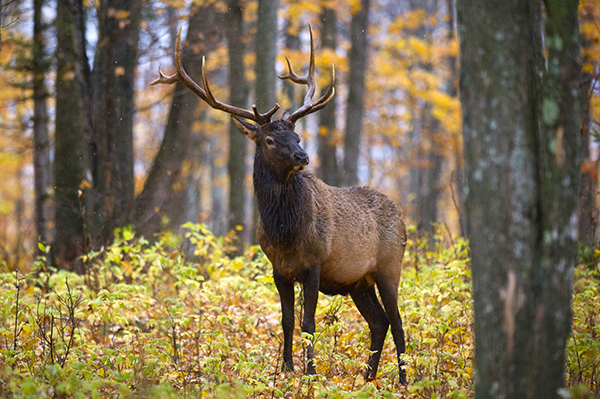
Michigan’s original native elk disappeared in 1875 due to overhunting and habitat loss. They were reintroduced in 1918, and populations have since stabilized, according to Rudolph.
“We are working on viewing the uniqueness that they bring to the communities where they’re around, and then balance the efforts to manage their population to minimize potential conflicts,” he said.
In 2025, Michigan hunters shot 153 elk. The DNR estimates Michigan’s elk population to be around 1,100 animals.
Every year, the National Resources Commission works alongside the DNR to create quotas to control the number of elk that can be taken.
“Our five-year average has been around a 72% success rate in fulfilling those quotas,” said Rudolph, while “the 2025 success rate was 64%.”
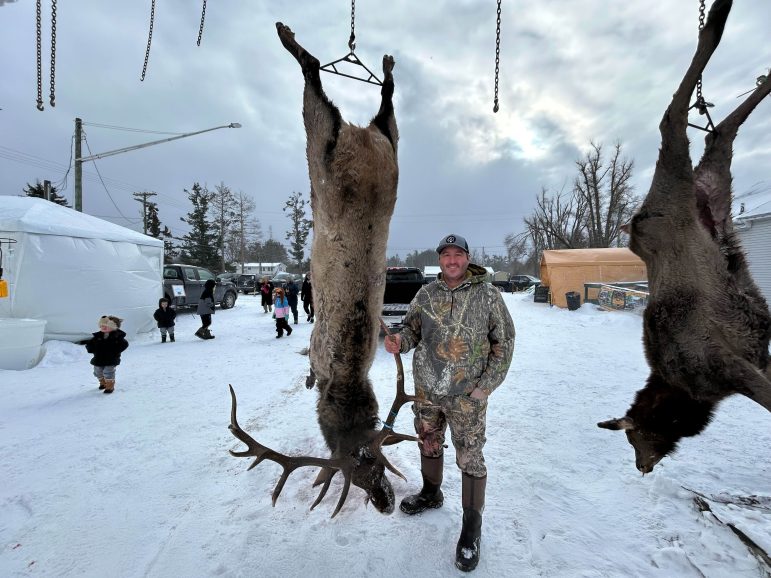
Michigan Department of Natural Resources
Brent Henige of New Lothrop shot this-559 pound bull on Dec.13, 2025.Licenses are awarded to applicants through a random drawing. Once selected, they receive specific information on the hunting period and type of license they have received.
“Some receive licenses that are ‘any elk,’ which mean they can pursue bulls, which is often the preferred target because they are antlered animals,” said Rudolph.
Some, however, receive licenses for antlerless-only elk to control the number of females in the population.
There are two hunting periods: The first consists of three independent sessions throughout August and September, and the second from Dec. 13-21. The second period poses challenges to some hunters because of unpredictable weather conditions and proximity to the holiday season.
When selected, “you will have an opportunity to hunt in one of two core elk range units” said Rudolph.
Hunters are restricted to the land of the Pigeon River Country State Forest and what is referred to as the “Elk management Unit X” land, both in the Northern Lower Peninsula near Gaylord.
As the 2025 hunt came to a close, the DNR drafted an alternative to its current Elk Conservation and Management Plan.
The proposal aims to lengthen both the first and second hunt periods, and most notably, consolidate the first hunt into one continuous period.
“We are aiming to make it more convenient for hunters having a more contiguous period so they could choose when they’re able to participate,” says Rudolph, who said that the change will give hunters who aren’t local more leeway, increasing the success rate of the first hunt.
According to the DNR, the proposed first period would be 30 days from September to the beginning of October, and the second period would run from Dec. 1st to the 15th.
They intend to shift the first hunt to begin at later dates to avoid hot weather which is both uncomfortable to hunt in and leads to more elk meat spoiling.
The new dates for the second hunt would be more accessible to hunters who celebrate holidays towards the end of December.
Michigan residents were given the opportunity for public comment on the proposed regulations.
Seventy-three residents emailed their thoughts to the DNR before the Jan. 23 cutoff. Rudolph said 63% supported the change and about 27, or 37%, were opposed to some aspect.
While a majority supported the proposed regulations, many were concerned that the new timeline would overlap with the days to hunt bears.
“Some hunters can pursue bear[s] with dogs, and hounds moving through could make hunters anxious or could just lead to some conflicts,” said Rudolph.
Chad Sides, who chairs the Michigan Elk Country Association, a conservation organization based in Gaylord, is weighing the benefits of the proposition.
“It could be beneficial if implemented properly,” Sides said. “It may provide a better experience for the hunters and have a better hunt.”
On the other hand, Sides said he is apprehensive about the elk population going forward. “I hope that the state realizes that our herd is significantly down from years past.”
A more successful hunt could decrease the population at a more rapid rate, Sides said.
The regulations will be finalized during the Natural Resources Commission’s April meeting.
Before then, Rudolph and the DNR will try to reduce conflict with the bear hunting season. “We will be making some adjustments to the proposed dates and lengths to still reach the original objectives.”
Rudolph said the elk hunt is a vital and unique resource in Michigan.
“We’re happy to be able to take input on how we can try and best accommodate some of the diverse opinions people have,” he said.