By Anna Ironside
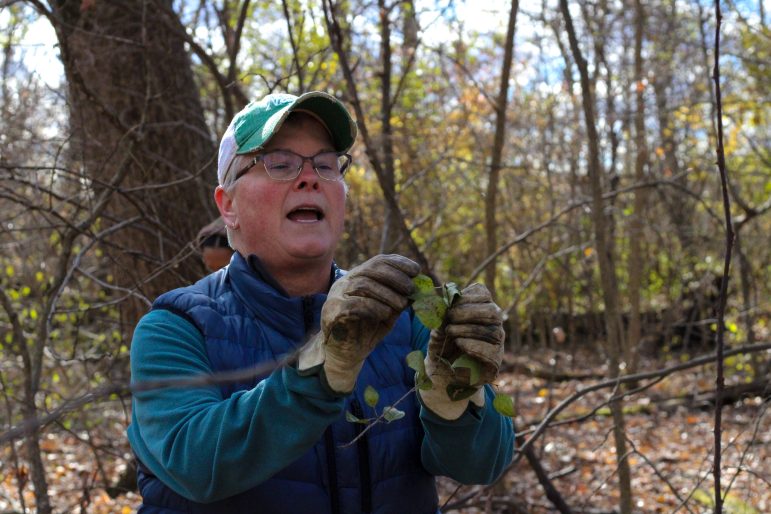
When Carolyn Miller walks into the woods, many students follow, some carrying tools and many carrying a curiosity for nature that they didn’t have before they met her.
“We have to take care of these native plants and insects because nobody else is going to do it,” Miller said. “And once people start looking closely, they really want to help.”
Miller is a botanical technologist at Michigan State University’s W.J. Beal Botanical Garden, as well as a master’s student.
Her work has made her a driving force behind restoration projects on campus and beyond. From invasive species removal days to a growing movement to replace traditional turf lawns with native landscapes, Miller doesn’t quit.
At MSU, her work focuses on restoration and education.
When she first proposed removing invasive plants from the university’s woodlots, the policy at the time was to let nature take its course.
Miller repeatedly made the case that doing nothing would erase native flora in the woodlots as a whole. She gave a presentation about the ecological dangers of invasive species on campus to MSU’s Natural Areas committee, and the committee approved her program to manage invasive plants, which began last May.
“Everybody said, ‘Let Carolyn go for it!’” she said, remembering the encouragement she received from her peers to keep the project going. What started as one person pushing for change grew into regular volunteer events that attract staff and students.
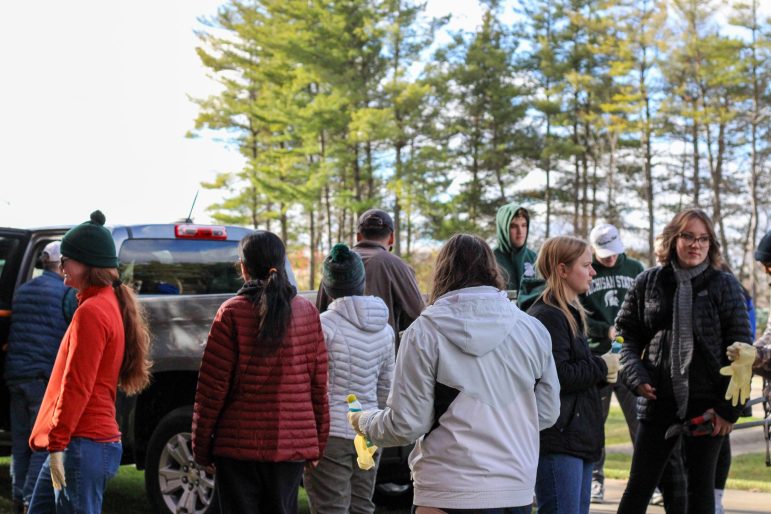
Students gathered to hear the plan from Miller before heading into the Baker Woodlot to remove invasive species last November.
They listened closely as she explained how the workday would unfold, then prepared to move into the woods after understanding the work that needed to be done.
Among the students volunteering that day was Bisia Love, a plant biology major and conservation assistant at the botanical garden.
Love first joined Miller’s work when the invasive species project began and said the impact was almost immediate.
“I wanted to be here. She’s so cool,” Love said. “Her passion just speaks out.”
Love credits Miller with helping her understand the science and deeper ecological importance of native species, especially after witnessing the scale of invasive plants along the Red Cedar River.
Love came to understand the importance of public outreach, and said she hopes to teach about plant ecology and work against “plant blindness,” which is the tendency of people to overlook nature in their environments.
Miller spoke about specific characteristics to help the group understand what to look for as they walked through the woodlot, such as uncommonly green foliage in the fall and winter.
Throughout the day, she demonstrated the proper way to cut each stem or trunk in a safe manner.
Invasive species are defined as living organisms — such as plants, animals, and microorganisms — that are usually not native to a specific location and cause harm to the community’s economy, environment or health. Invasive plants can cause significant environmental and public health issues, such as out-competing native plants that play important ecological roles.
According to the Midwest Invasive Species Network, more than 800 nonnative species have established themselves across Michigan.
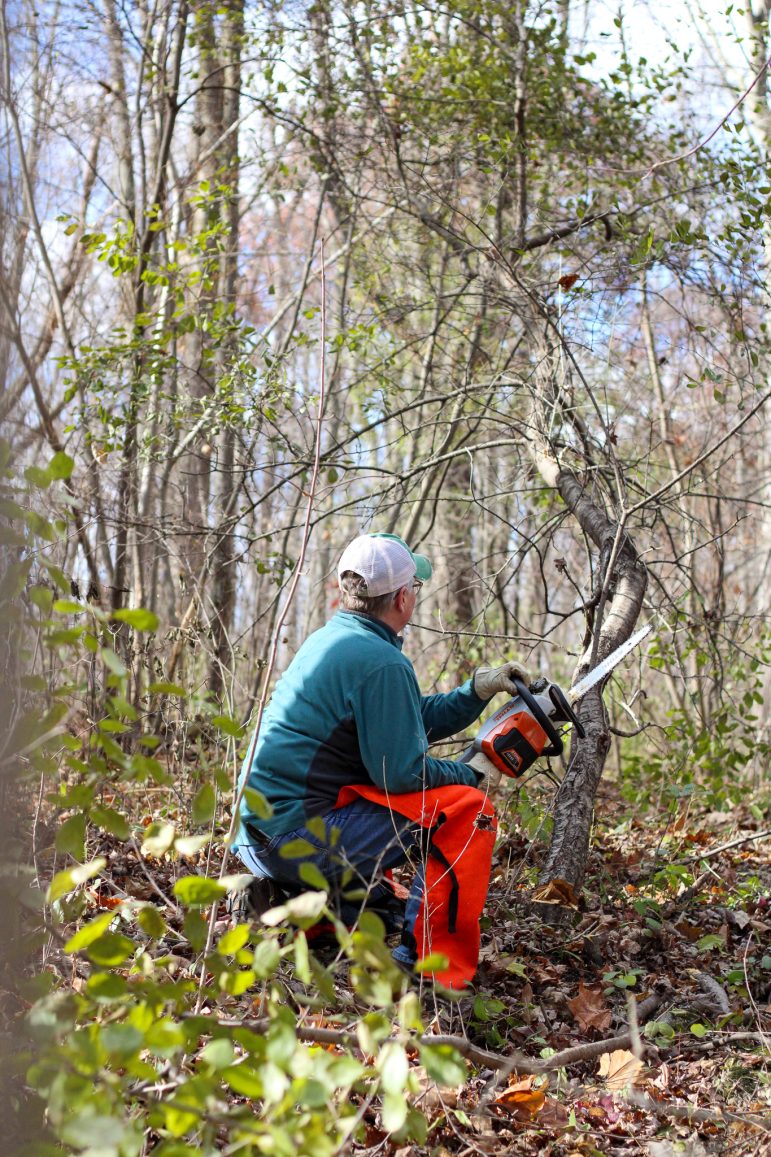
Leading a group of new volunteers through a dense section filled with invasive shrubs and saplings, Miller outlined their first task of the day: cut down diseased saplings so they can’t spread invasive mold and pests to healthy trees.
Students later asked Miller for guidance on how to cut down an invasive tree in the best way.
Miller evaluated the angle of the trunk and showed them how to properly position the tools. The students watched closely before she made the final cut.
Afterward, she applied pesticide to the stump, showing how to properly saturate it to prevent regrowth.
She explained that a full coating is necessary for species that aggressively re-sprout. A bright dye marks the surface to show it has been properly coated and helps prevent sprouting in the spring.
The distinct blue color also lets other volunteers know in the future that the site has already been treated.
Miller’s educational outreach goes beyond MSU and natural landscapes.
She has helped dozens of homeowners across the greater Lansing area landscape their properties with native plants instead of turf grass.
Miller refers to turf grass as a “dead zone,” explaining that it has shallow roots, contributes to flooding and requires intensive maintenance.
Native plants provide food for birds, insects and pollinators, while restoring soil health and reducing stormwater runoff.
For Miller, transforming a single yard is one step closer to what she hopes becomes a nationwide shift in how Americans design and treat outdoor spaces.
She urges residents to take small steps to remove invasive plants, observe changes and connect more deeply with the life around them.
“Learning a little bit can go a long way,” she said.
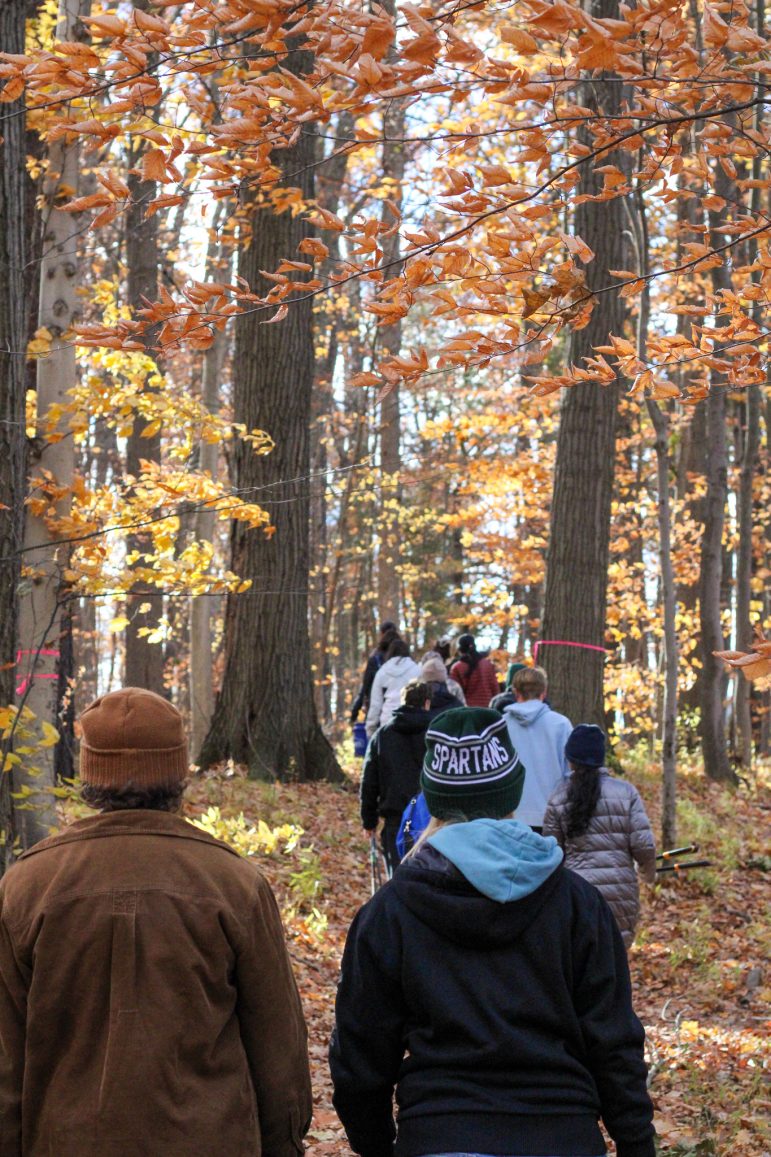
Students and colleagues said the reason Miller’s work resonates with so many is simple: She doesn’t just teach stewardship — she models it.
“It’s the combination of her expertise and enthusiasm that keeps volunteers coming back,” Love said.
Miller’s influence extends beyond student workers and volunteers. Angelica Bajos, an MSU graduate who studied environmental studies and sustainability, met Miller through the Beal Scholars Program.
The two later gave a presentation at a national conference on ways connecting people to plants can affect well-being.
Bajos said Miller’s work resonates because she makes science accessible and memorable.
“Every conversation or program I host is one step closer to helping others be stewards of the land,” Bajos said.
Bajos also said the hands-on days — removing invasives, planting natives, and working with community members — are often the most meaningful.
Miller said she believes the next generation of environmental caretakers will emerge from such experiences because moments spent kneeling in the dirt and learning hands-on lessons about resilience and responsibility stay with people.
“We have to put our phones down and look at what’s around us,” she said.