
By Kyrmyzy Turebayeva
In the late 1970s, when most wildlife conservation programs in the United States focused almost exclusively on game species, a quiet but historic shift began in Minnesota.
It was here that one of the nation’s first state programs dedicated to protecting so-called nongame wildlife emerged from butterflies and bats to bald eagles and river otters.
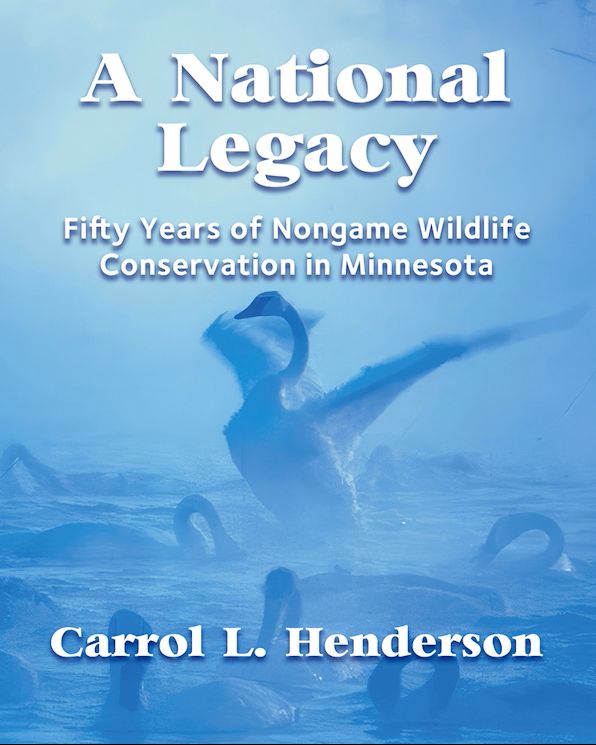
That story is now told in detail by Carrol Henderson in his new book, “A National Legacy: Fifty Years of Nongame Wildlife Conservation in Minnesota” (University of Minnesota Press, $49.95).
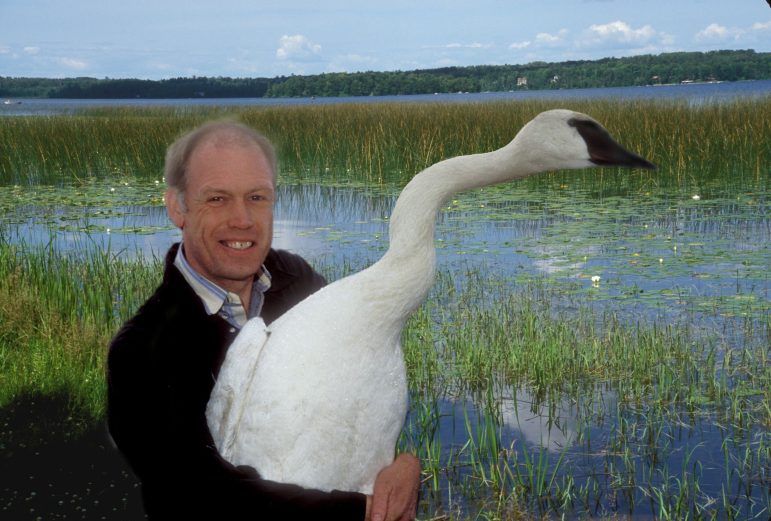
Henderson is the man who stood at the origins of this effort and spent nearly half a century working for the Minnesota Department of Natural Resources.
“When I joined the Department of Natural Resources in 1974, everything was focused on game species and hunting. I worked for three years as a wildlife manager, but I was always interested in the animals that fell outside the world of hunting” said Henderson.
In 1977, Minnesota officially created a new position dedicated to protecting nongame wildlife which included birds, mammals, reptiles, amphibians, fish and invertebrates like butterflies and moths.
Henderson became the first person appointed to that role and remained in the position until his retirement in 2018.
His task was to develop a program to protect animals that were not of interest to hunters, including species that could not be hunted or trapped.
“I was given the freedom to act, but there was no funding. In most state departments of natural resources, money came from the sale of hunting and fishing equipment for game species, but not for nongame wildlife,” he said.
“That’s when I realized I had to find a completely different approach, and we launched a voluntary tax check-off that allowed people to donate through their state tax returns to fund my program,” he said.
“The idea turned out to be revolutionary. Within a few years, the program was raising about $1 million a year in private donations. The state added matching funds, and the total budget grew to about $3 million annually,” Henderson said.
The program’s first major project seemed almost impossible. Henderson wanted to reintroduce river otters to southern Minnesota after they had disappeared from the region more than 100 years prior.
Their disappearance likely resulted from trapping in the late 1800s and early 1900s when there were virtually no limiting restrictions, seasons, bag limits or regulations, he said.
“I was able to recruit volunteers — trappers from northern Minnesota — who captured the otters without harming them. Together with conservation officers, we transported them to the ‘’Montevideo area, where they were released into the Minnesota River refuge,” Henderson said.
The project began with 22 otters and resulted in the restoration of the otter population along the Minnesota River.
“It became a very beautiful and successful restoration program,” he said
Over time, the scope of the program expanded. As funding increased, it launched larger projects, including reintroduction of peregrine falcons and trumpeter swans.
Over time, however, the focus expanded even further. Increasing attention is now devoted to invertebrates and lesser-known species such as butterflies, mussels, small stream fish and rare moths.
“Today we are no longer talking about hundreds of nongame species, but thousands across Minnesota and other states. People are beginning to understand the role all of these species play in food webs and ecosystem balance,” said Henderson.
Henderson’s love for wildlife began in childhood. He grew up on a small farm in central Iowa, where he developed an early interest in life outdoors, including hunting and trapping. It was then that his desire to devote his life to wildlife conservation began to take shape.
Later, he earned a bachelor’s degree in zoology from Iowa State University, followed by a master’s degree in ecology and forest resources from the University of Georgia, which ultimately shaped his professional path.
“From a very young age, I dreamed of devoting my life to wildlife conservation,” he said.
“At first, it seemed like it would simply be a job working with animals and nature, but over time, through my studies, international internships and various projects, I found myself in a position where it became possible to change not only the fate of individual species, but also the entire approach to nature conservation in our state and beyond,” Henderson said.
One key principle of Henderson’s work became active engagement with the media and public outreach.
In graduate school, he studied public relations and journalism, which he later deliberately made part of his conservation strategy.
“I always worked closely with newspapers, radio and television, constantly giving public talks and telling people about our projects,” he said. “
Over time, this turned into a kind of hybrid program that combined wildlife conservation, journalism, and public relations. That is how we were able to attract public attention and build the level of support without which the program simply could not have survived,” he said.
He took a significant portion of the photographs for the book.
Today, even in retirement, Henderson works to restore nature. On his own 67 acres of family farmland in Iowa, he is recreating native prairie and establishing wetlands that become home to birds, amphibians, insects and other wildlife.
In the book, Henderson presents not just memories of his career, but a detailed map of how private initiative, public support and government policy can work together to build a sustainable conservation system.
“Each person can become part of protecting nature, even in their own backyard. It doesn’t matter whether you care about butterflies, birds or mammals. Everyone has their own path and their own contribution,” he said.
“You can start with a small idea and come to large-scale changes at the state and national levels. The most important thing is to understand that we are all responsible for preserving biodiversity.”