
By Joshua Kim
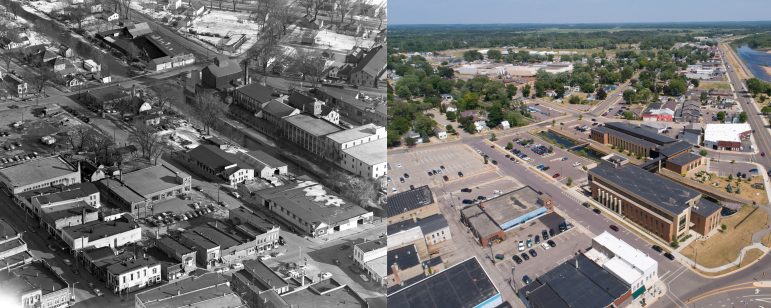
Following the completion of segments 1 and 2 of the Portage Canal, local residents and visitors can use the historic site and its amenities following years of disrepair.
The canal, located in Portage, Wisconsin, was built in the mid-1800s to connect the Fox River with the Wisconsin River but fell into disrepair after the 1950s.
The Portage Canal is listed in the National Register of Historical Places, but Issac Ross, the regional supervisor of redevelopment and remediation for the Wisconsin Department of Natural Resources, said that sediment build-up and contamination have caused the canal to deteriorate.
“Within the state, the Department of Natural Resources was the agency tapped to assist the clean-up efforts that are out there, seeing as we are the ones that house the remediation and redevelopment program,” Ross said.
“One of the main goals is putting historically contaminated properties back into beneficial use,” he said.
“That way we can clean up the water body, making sure it’s protecting the environment, but then also giving it a second use for the people of Wisconsin and in the area to use it,” he said.
The canal is an important part of the city’s cultural identity, said Toby Monogue, the manager of parks and recreation for the city.
“Portage is one of the oldest settlements in the state as we go back to the name,” Monogue said.
“Portaging is carrying a canoe from one water to another. The canal was created for transporting, so there’s a lot of history there,” he said.
“Our city logo is showing an individual portaging a canoe – that’s the history of the settlement,” he said.
Monogue said overgrowth along the canal and mud sediment blocking the water flow were also problems the city faced prior to the restoration.
Dredging the sediments from the canal improves the flow of water and protects the city during strong storms.
“The canal is also used as a retention basin for storm runoff. Cleaning that up helps with some of the water movement,” Monogue said.
With segment 2 complete, residents and visitors can now access the new path alongside the canal, revealing areas that were once obstructed by overgrowth.
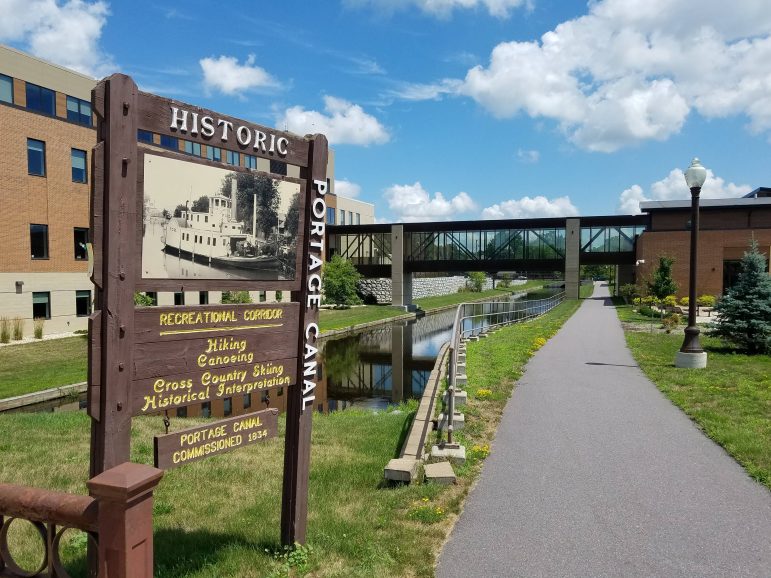
“We see a lot of activity that never would’ve been in that area,” Monogue said, “From a look and an aesthetic standpoint, it’s better for the community.”
“Part of the canal is on the Ice Age Trail, so the Ice Age Trail is travelled and walked on by people from all over,” he said.
The Ice Age Trail is a national trail formed through glaciers that runs through the state. Portage is nicknamed the “Ice Age Trail Community” as parts of the trail run along the canal and through the downtown area.
By having the Portage Canal restored, the Ice Age Trail is more accessible, benefiting the local economy.
Marianne Hanson, the CEO of the Chamber of Commerce for Portage, said visitors to the Ice Age Trail patronize the city’s local shops and restaurants.
“I would say the economic return has been the fact that more individuals are hiking along the Ice Age Trail next to the canal,” Hanson said.
“The Ice Age Trail does what they call a Mammoth Hike Challenge in October, and they challenge you to walk so many miles of the trail and visit three communities throughout the state,” she said.
“Because Portage is a trail community, we get the additional benefit of the fact that the trail is next to the canal to get people to come and support those communities,” she said.
Ross said that any community that restores a historical site makes it easier for entrepreneurs to start new businesses and improve residential areas.
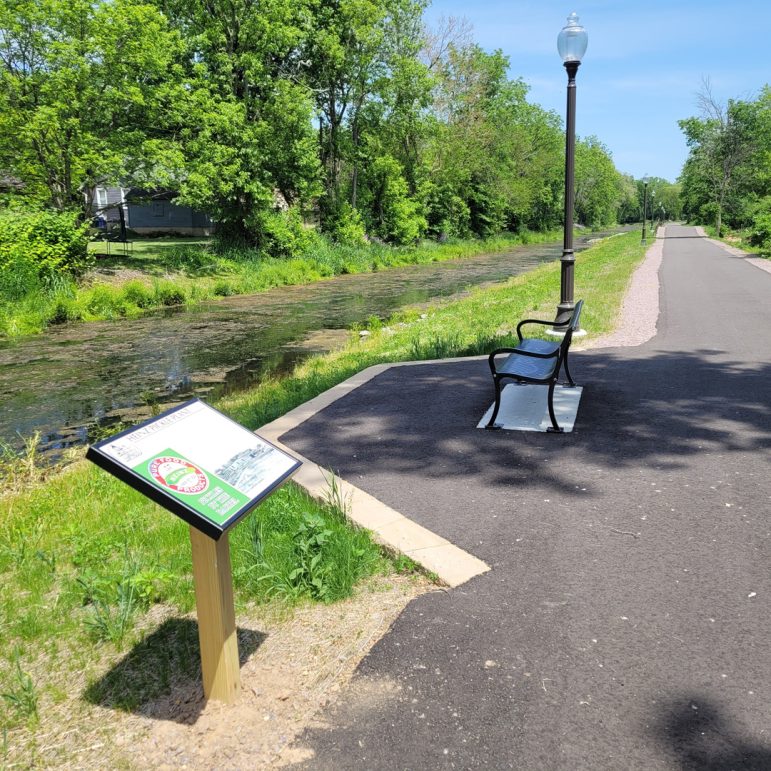
“Once the environment in the area is restored to a reusable state, it also has a good economic impact for businesses in the community around it,” Ross said.
“If someone is starting a new business or expanding their business, it’s much easier to do so if the environmental work is complete in the area and knowing they don’t have to incur extra costs.”
He said that applies to residential property too.
“Those are going to be in areas that have been cleaned up or have a clean environment. Then if you combine it with the recreational opportunities that exist out there, you get a bigger economic impact,” he said.
Hanson said she is proud to have the canal in her backyard.
“It brings a lot of history into the community and gives us the opportunity to showcase the outdoors that we offer here in Portage,” Hanson said.
“Because we are between two waterways, we try to showcase those two, the Wisconsin River and the Fox River, and that connection of that canal between them to be able to say to people, ‘Hey if you are looking for a place to explore and get outside, then we have things that you can do here in Portage.’”