By Alice Rossignol and Rachael Gleason
The time is finally here to determine which invasive species you think is the worst for the Great Lakes.
Will it be the water-filtering quagga mussel? Or the vampire-like sea lamprey?
You know the drill. Fight and debate for your pick below.
Fighter Profiles:
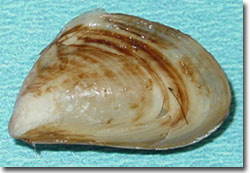
Quagga "The Quagmeister" Mussel. Photo: USGS.
Quagga “THE QUAGMEISTER” Mussel
Legal name: Dreissena rostriformis bugensis
Home Turf: Ukraine, Ponto-Caspian Sea.
U.S. Fighting Debut: September 1989 near Port Colborne, Lake Erie.
Agent: Ballast water
Preferred fighting arena: All five Great Lakes.
Weight/Size class: Reaching sizes up to 4 cm – but they are often larger than zebra mussels.
Fighting Skills:
– This fella is highly adaptable.
– As ravenous water filters they suck up phytoplankton and water particulates starving out creatures higher up on the food chain that depend on them.
– By filtering water they increase water clarity, which can cause an increase of aquatic plants.
– This competitor loves to cling to hard surfaces like water pipes, inhibiting the water flow to these structures. But it can exist anywhere like lake bottoms.
– Quaggas gather toxins in their systems. When eaten by predators these toxics are passed up the food chain.
Life Expectancy: Three to five years.
Offspring: Up to one million eggs per year.

The sea lamprey takes on the alewife. Photo: U.S. National Oceanic and Atmospheric Administration
Sea “THE GREEN LAMP-REY” Lamprey Legal name: Petromyzon marinus
Home Turf: Atlantic Ocean, New York and Vermont’s Finger Lakes and Lake Champlain
U.S. Fighting Debut: 1830s by way of the Lake Ontario canals and locks
Preferred fighting arena: All five Great Lakes
Agent: Canals and locks
Weight/Size class: 18 to 24 inches
Fighting Skills:
– Primitive and predacious behavior.
– Lampreys latch on to their opponents and suck the life out of them.
– They spend more than a year picking lake fights with unsuspecting fish.
Life Expectancy: From 6 to 20 years
Offspring: Lampreys produce many babies, but they only lake fight as adults.
[polldaddy poll=”3994739″]